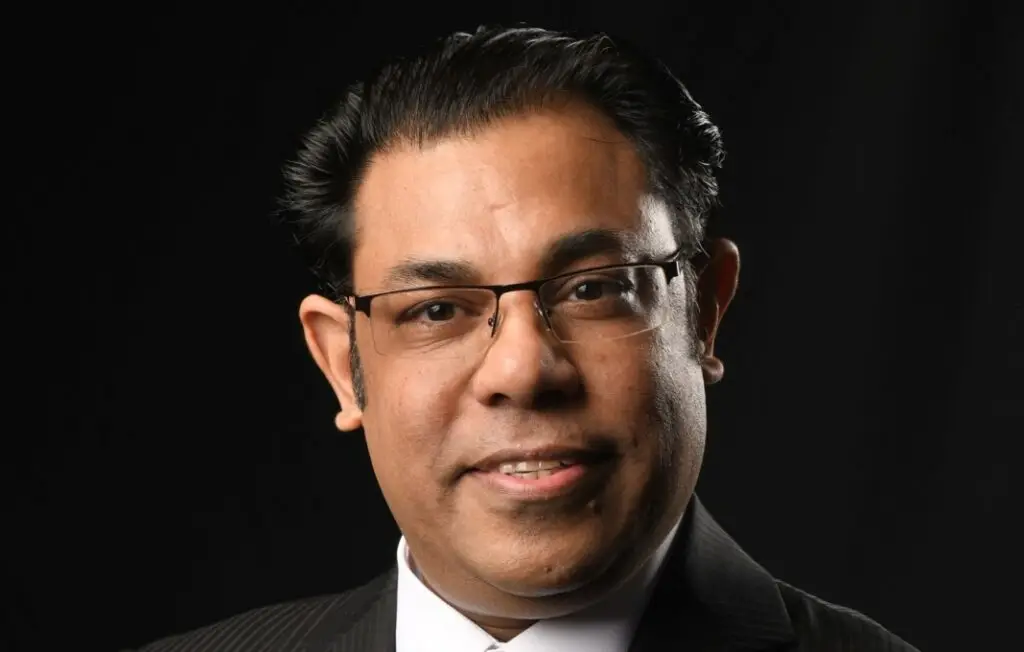

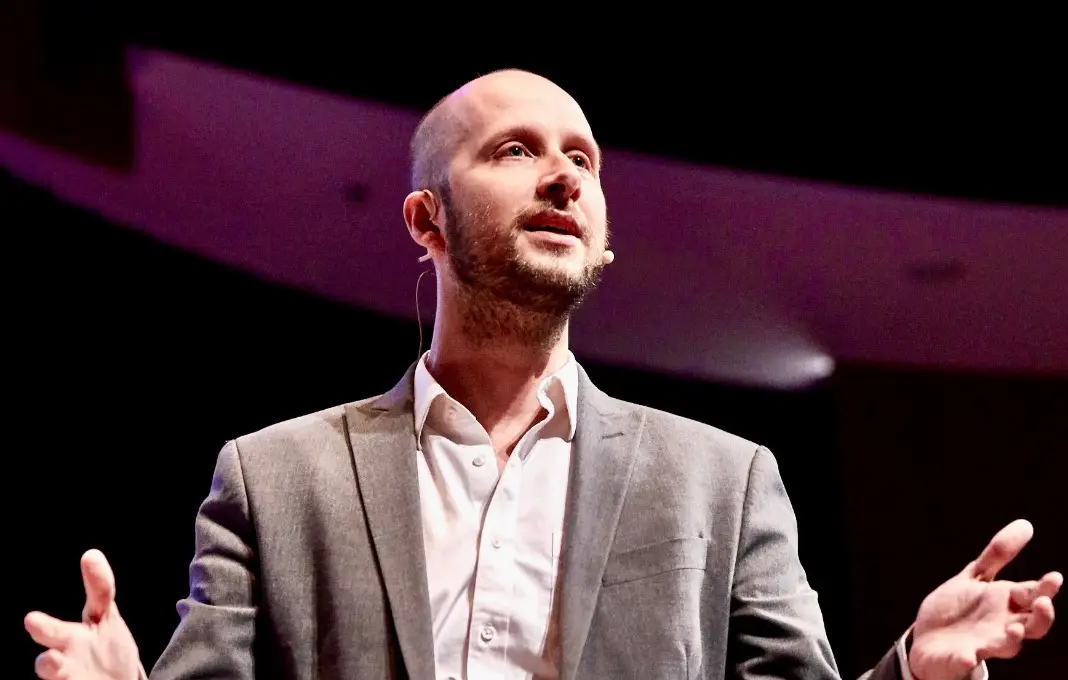
For Matt Wallaert, managing remote workers is also about managing cultural differences. Wallaert is chief experience officer at Oceans Talent in San Diego, California, in charge of recruiting and training divers across the world for a company headquartered in Sri Lanka. This means he has to navigate the cultural norms of two different countries, as well as the culture of the company itself.
“The key to managing across cultural differences is to be explicit,” says Wallaert. Rather than trying to mash up different cultural expectations into a hybrid mess, he’s upfront with what system the company will be operating under. This clarity of leadership has benefits beyond culture. Wallaert shares tips for leading hybrid teams, scaling people operations and the one change that reduced attrition at Ocean Talent by 80 percent.
How do you successfully manage cultural bridge-building?
Like managing remotely, the key to managing across cultural differences is to be explicit. In Sri Lanka, you often see a “bad dad, good mom” setup at work: Your manager—typically male—is big and scary and yells at you about performance, while your HR leader—typically female—consoles you about the stress that creates.
This is very different from the American system, where the HR leader is more programmatic and your manager is the single focus for both performance improvement and empathetic coaching.
Rather than try to create some terrible hybrid that serves neither team well, we were very explicit: At Oceans, we are going to use the American system and your pod leader will be your first point of contact for all things. By being clear, our team understands both why we made the decision and how it functions, so they can adopt the best adaptive strategy for that environment.
There are other cases where we have chosen the culturally Sri Lankan practice. For example, our biggest company celebration each year is centered around Avurudda/Puthandu, the Sinhalese/Tamil new year celebrations that occur in April. It is less important which cultural tradition we select than it is to ensure that we are doing so with deliberation and clarity.
And, of course, there is a third culture at play: that of the company itself. This explicitly belongs to neither external culture and in many ways overrides them. At Oceans, everything is nautically themed. It is like a shared competition to see who can come up with the worst pun-worthy oceanic term and it belongs to neither American nor Sri Lankan culture but to the Oceans team itself.
How do you manage a hybrid team?
I feel fairly safe in saying that pure remote and pure in-person are easier than hybrid. When people are faced with a common set of environmental variables, they tend to react in relatively similar ways: Most remote workers struggle with the boundary between work and personal space; most in-person teams dread the commute.
But what happens when half your team is worried about being able to see their bed from their desk and the other is worried about rush hour? Or worse yet, when your remote team is feeling desperately lonely and your in-person team is feeling distracted by colleagues? It isn’t just that the problems are different but often that they are diametrically opposed.
What I’ve seen work is to validate and embrace the difference. Rather than shooting for a halfway point, be explicit about how interventions are specifically designed to help each team differently. You don’t have to lock anyone out of an offering but helping them understand the motivation or barrier that a program is seeking to address makes it easier for people to self-select the right offerings to meet their individual needs.
How do fast-growing organizations successfully scale their people operations?
High-growth companies have to find a delicate balance: They can’t become too process heavy or they won’t be able to focus on actually growing the business, but if they don’t have at least some processes, they will never be able to service the demand they create.
Part of addressing that is recognizing that you will never get it right. You will always be either too early or too late. The key is being deliberate about which mode you’re choosing and why. As an example, if you know you need a process around something but don’t want to slow down to make one, you can explicitly plant a flag that says “I know this needs to get done and I’m going to do it after I actually need it.”
As messy as this sounds, it is far better than building a compromised process in the moment that doesn’t actually work but gathers institutional momentum simply by existing. Because “this is how we’ve always done it” is so strong, sometimes it is better to just leave it undone.
This applies to choosing to be early as well. An explicitly early process relieves anxieties that the company is becoming too rigid by making clear that it was an anticipatory choice, not a fear response. Even things as simple as naming change management initiatives as either anticipatory or reactionary can help normalize the rate of growth. Nothing makes change easy but calling your shots certainly makes it easier.
What is your approach to retention?
As with so many things, motivation at work goes through cycles. In the 80s and 90s, it was all about the money. And in the 00s and 10s, you saw a strong pivot to meaning and having an impact. But post-pandemic, we’re seeing a huge emphasis on personal growth as the middle ground between the two: It is individual-focused—like money, but culturally-desirable—like meaning.
Focusing on making sure every employee is growing in ways that are visible to them is a massive unlock. Anecdotally, it has been the secret to reducing attrition from 15 percent to less than 3 percent at Oceans over the last year.
Putting personal growth front and center starts with clear skill pathways. Rather like marking your height on a doorframe, it is easier to see that you’re growing when you have a clear ruler to track your progress. Roles need specific competencies that are defined and measurable and that the whole company can use together.
At the same time, you need goal setting. At Oceans, for example, we recognize four types of goals: vertical goals help someone advance within their role, horizontal goals about cross-training with another discipline, internal goals center around moving from one role to another and external goals are about moving beyond the company.
By having people clearly identify what type of growth they want in ways that are publicly available, everyone at the company can start to provide opportunities that align. Rather than individually owned, growth becomes a shared resource.