

Imagine your right leg becomes 20 times stronger overnight. At first it feels like a miracle. You move faster and jump higher than ever before. But soon, your hips ache. Your left leg can’t keep up. Your spine twists to absorb a force it was never built to handle. Your back tightens to keep you upright.
The strength is real, but so are the new aches. In your own body, you would recognize that something needs to adjust if you suddenly had a new power in one area.
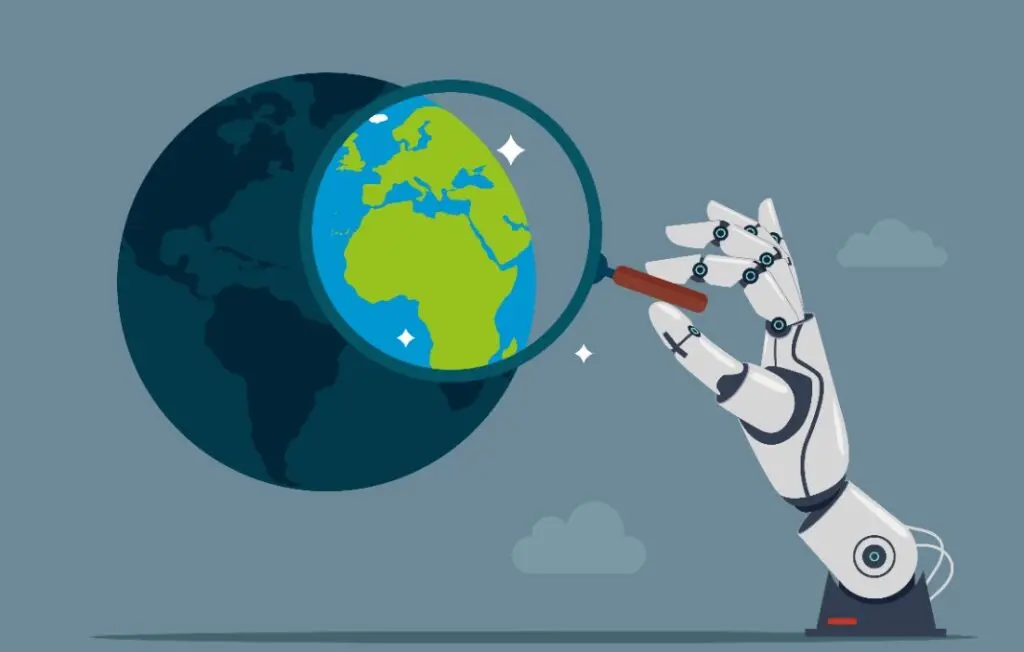
There’s no mass market for bionic legs, at least not yet. But tech advancements in the business world are everywhere, offering their own version of super strength. Artificial intelligence, automation, real-time dashboards, rapid reporting—they provide real power. But if the rest of the organization has not stretched to support that new power, strain begins.
It’s important to remember that every piece of technology gives something and takes something. GPS ensures you never get lost but weakens your ability to navigate without it. Texting makes communication instant, but removes tone, timing and warmth. Automated customer service responds in seconds, but trades away empathy. The gains are real, but so are the losses. When you only measure what is gained, you miss what becomes weaker alongside it.
Check Your Vital Signs
When considering new tech, you need to think of your organization’s vitals, just like you would with your own body.
First vital sign: what is getting stronger. Measure the wins everyone celebrates: speed, scale, accuracy.
Second: what is getting weaker. When sales teams stop walking the floor and rely entirely on dashboards, what instincts fade? When operators no longer adjust machinery manually, what troubleshooting skills disappear? These losses are like muscle atrophy, subtle until you need the strength and find it gone.
Third vital sign: where power shifts. Pay attention to who now holds decision authority. If every solution begins with software instead of strategy, or if operations halt when one platform glitches, you have created a new form of weakness. Healthy companies, like healthy bodies, distribute strength across multiple systems.
Fourth vital sign: recovery capacity. Can your organization still function, even clumsily, without its technological crutches? If the brace disappeared tomorrow, could you still walk? Companies with this kind of analog resilience gain an advantage that only appears during disruption.
Align Tech to Mission, Vision and Values
Technology changes who makes decisions, how information moves and how people understand their work. If your mission, vision and values are not strong enough to absorb that pressure, the organization bends in ways you never intended.
Before approving any new system, sit with the discomfort. Ask: If our efficiency depends on this technology, what happens when it fails? What are we willing to lose? If you cannot name the cost before it arrives, it will catch you off guard when it does.
Vision needs its own test. If your company claims it will grow, innovate or serve differently in five years, does this technology move you toward that future, or does it only make today easier? Tools that improve the next quarter but weaken the next decade are the most dangerous.
Values require the most honesty. Will this tool make it harder for your people to act with integrity, empathy or fairness? Does it grow judgment, or replace it? The real test is not whether technology supports your values in theory, but whether your people can still live them while using it.
When Power Shows Up as Weakness
Most technology failures aren’t software failures. They’re leadership failures, breakdowns in trust, clarity or accountability that start long before anything crashes. You will see faster reports paired with quieter meetings. People follow the process, but speak with less certainty. Managers wait for the platform to give an answer. Teams stop debating ideas, assuming the data already decided.
The rollout might look like a success. The metrics improve; dashboards light up green. But after the system is in place, do managers still feel responsible for outcomes, or do they point to what the platform decided? When something goes wrong, do people fix it, or hide behind the technology?
When people start saying, “That is what the dashboard says,” or “The system will not let me,” it signals that ownership has shifted from people to software. A practical test is to temporarily pull the plug. Can your team still sell without the CRM? Prioritize without automation? Explain a decision without analytics? If not, you have achieved efficiency, but lost resilience.
To see misalignment early, look beyond output. Who no longer makes decisions they once owned? Which conversations have stopped happening? When does energy drop even as productivity rises? These are signs the organization’s core muscles, its purpose, judgment and human connection, have weakened while its systems strengthened.
How to Add Technology Without Losing Your Core
Before adopting new technology, diagnose your real problems. Do not start with a list of tools. Start with where your organization struggles: delays, repeated errors or talent wasted on repetitive tasks. Technology should be a prescription, not a purchase made out of excitement. Pilot it with a small team to uncover friction and build internal champions who can translate it to the rest of the organization.
Do not underestimate training. A tool is only as strong as the people who use it. Most failures do not come from the system, but from people not being prepared to adapt.
As you modernize, protect what makes your organization distinct. Use technology to remove friction, not to replace the culture, service or relationships that make you competitive. When measuring success, look beyond cost or speed. Ask whether people make better decisions, whether momentum has increased and whether innovation is easier. The smartest upgrades do not just accelerate output, they sharpen thinking.
A bionic leg without balance would be a liability, right? Technology is no different. It gives your organization new force, but unless the rest of the organization adjusts with it, that force becomes friction. The future does not belong to the fastest company. It belongs to the company strong enough, and aligned enough, to handle its own power.