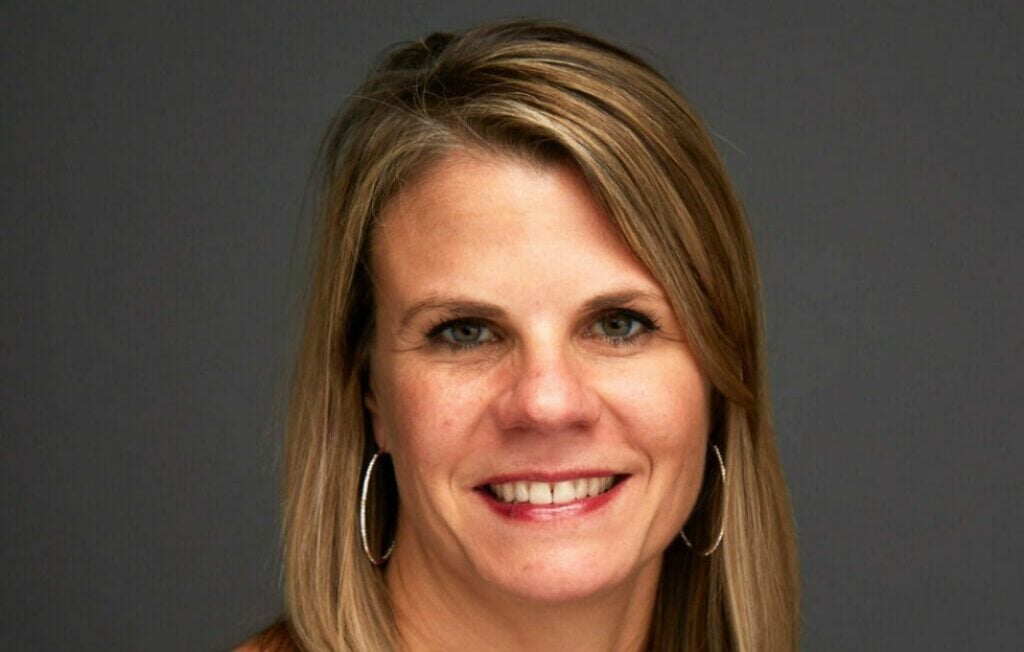


HR leaders usually got into the field in part because they like people. But don’t confuse that with being a people pleaser, says industry veteran Jillian Phelan, chief people officer at Criteria Corp., a pre-employment testing company based in Los Angeles.
The best in the field know that success today means combining financial sophistication with great communication skills. And sometimes that means saying what’s hard or unpopular.
Phelan, who has more than 25 years in HR, including leadership roles at Ernst & Young, McGladrey & Pullen, Avetta and more, shares how to do just that in a conversation with StrategicCHRO360.
Given your extensive background across HR and people management roles, how do you feel the HR industry has evolved over the years? How have you navigated each transition?
HR has moved from administrative and compliance-heavy to strategically indispensable but not within a measured framework. There are still organizations treating HR as a back-office function, while others expect it to be a business driver, culture architect and risk mitigator all at once.
The biggest shift I’ve seen is the expectation that HR understands the business—finance, product, technology and revenue—as well as the workforce strategy. It’s no longer enough to “care about people.” HR needs to understand annual recurring revenue, headcount ROI, margin pressure and how talent decisions show up on a P&L.
I’ve navigated that by refusing to stay in a purely “people” lane. I’ve forced myself into the financials, into workforce modeling, into board-level conversations around revenue per employee and staffing ratios. That’s where credibility is built. And candidly, that’s also where HR earns its seat—when you can connect a hiring plan to revenue outcomes or explain how a comp strategy impacts retention and
EBITDA.
At the same time, I’ve held a pretty firm line: As we become more data-driven and AI-enabled, the human side matters more, not less. The role required team members in HR to hold both.
What’s a common misconception employees have about HR, and how do you personally work to challenge that perception?
The biggest misconception is that HR exists to protect the company from employees. The reality is more nuanced. HR’s job is to protect the company and create an environment where employees can do meaningful work, be treated fairly and grow. Those things are not mutually exclusive. When done correctly, they reinforce each other.
Where HR loses trust is when it becomes opaque or overly political. I challenge that by being very direct. I explain the “why” behind decisions, even when they’re unpopular. I don’t overpromise. And I don’t pretend HR can solve everything.
I also try to model fairness over likability. Employees don’t need HR to be their friend. They need HR to be consistent, rational and willing to say uncomfortable things out loud.
Have you noticed any differences in managing the latest generation of candidates compared to Millennials and Gen X employees? How has your role evolved to reflect these changes?
Yes, but I think the conversation is often oversimplified. Gen Z isn’t fundamentally different in what they want, they are simply more comfortable asking for it.
They want clarity, growth, fair pay and respect. What is different is their tolerance for ambiguity and misalignment. When these are present, they will opt out faster.
Gen Z entered the workforce at a time when information is radically democratized. They grew up questioning systems, not defaulting to them. Their view and life experience changed the role of HR. Organizations can no longer rely on vague career paths or generic engagement tactics.
Because of this generation, organizations need clear expectations, transparent feedback loops, real-time development—not annual reviews—and managers who can actually coach. HR has to push organizations to become more explicit and less performative. Gen Z sees through performative culture immediately.
What’s one moment in your career that fundamentally changed your philosophy on people leadership?
There wasn’t a single clean moment, it was pattern recognition that developed over time.
Early in my career, I believed that if you hired smart, motivated people and treated them well, things would largely work themselves out. That’s not true. I have seen highly talented teams fail because expectations weren’t clear, accountability wasn’t enforced or leaders avoided hard decisions—especially around underperformance.
The shift for me was recognizing that clarity is kindness. Avoiding difficult conversations in the name of being supportive actually creates more harm for the individual, the team and the organization. That fundamentally changed how I lead. I am far more direct now. I set clearer expectations. And I move faster when something isn’t working.
Do you have any advice for aspiring HR leaders?
First, learn how the business operates. If you can’t explain how your company makes money and where it’s at risk, you will always be seen as secondary.
Second, build your tolerance for discomfort. This role requires you to sit in the tension between employee needs and business realities, between empathy and accountability. If you avoid that tension, you won’t be effective.
Third, develop your point of view. HR leaders who add the most value aren’t just responsive, they are opinionated. They’re willing to say, “This is the right path, and here’s why,” even when it’s not the easiest path.
Fourth, don’t try to be universally liked. It’s a losing strategy. Aim to be respected and trusted. That’s what actually moves organizations forward.
And lastly, lose the ego. Your role is not a power trip. You are not overly important. Lead with humility, grace, respect and empathy.